What it does
Your shop, on the number people already message.
Not an app your regulars have to be talked into downloading. Not a listing you rent space in. The ordering happens where the conversation already happens, and everything it produces — the menu, the orders, the kitchen ticket, the customer list — belongs to the business rather than to us.
01
Ordering on the number you already have
Your customers message the same number they message now. There is no app to download, no account to create and nothing to explain to a regular who has been ordering from you for years. The order arrives as an order rather than as a conversation you have to read.
02
A menu you change yourself, in the middle of service
Sold out at eight in the evening is one tap, and the dish comes back tomorrow morning on its own. Prices, sizes, add-ons and sections are yours to edit — not a support ticket, not a call to somebody in another city, and not a change that takes until Monday.
03
Every order on one screen, whoever took it
WhatsApp, the counter, a phone call you keyed in yourself, a QR code on the table. They land in the same place, in the order they arrived, with a token number the customer can quote. Nothing is a separate book that has to be reconciled at closing.
04
A kitchen screen that carries no money and no names
The line sees the dishes, the quantities and the token. It does not see the customer, the phone number or the total, because a screen that lives on a shelf beside a hot pass is the least private place in the building. That is enforced in the database, not left to a setting somebody might change.
05
The delivery area you actually cover
Draw it once — a radius, or the pincodes you will go to — and orders from outside it are turned down before anybody has started cooking. You set what you charge to deliver, and you can test an address against it before you commit to it.
06
A customer list that is yours
Who orders, what they order, when they last came back. It is your list, it leaves with you if you leave, and it is the one thing an aggregator will never hand over. Someone who asks you to stop messaging them is recorded as having asked, and is not messaged again.
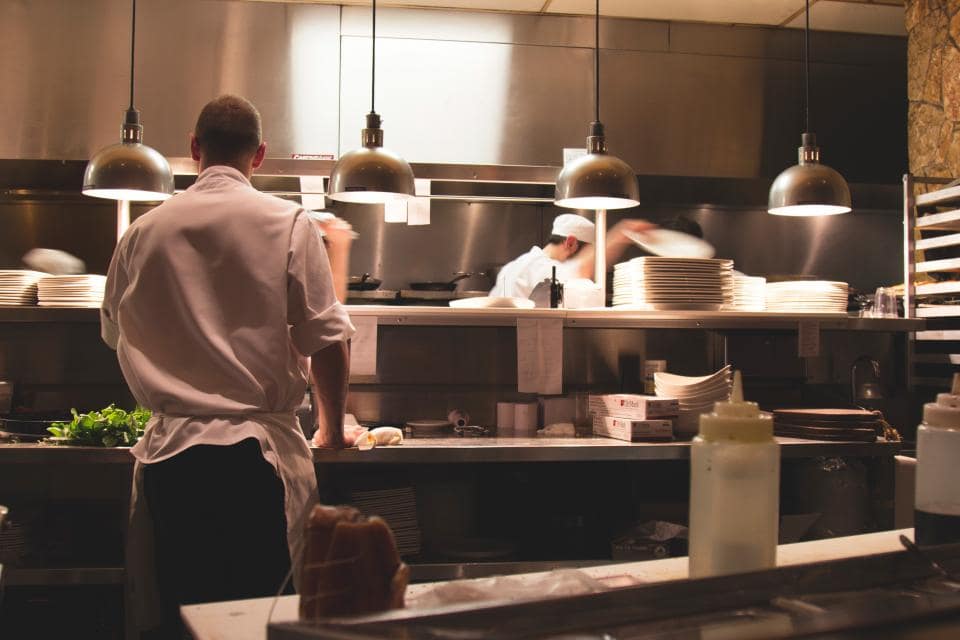
The software should be the quietest thing in the kitchen.
One screen, the dishes and a token number. Nothing to log into twice.
Photograph: Michael Browning, CC0
What it does not do
The four things we would rather you heard now.
You have been sold to before, so here are the limits before the demonstration rather than after the invoice. If one of them rules us out, it rules us out today and neither of us has lost a month.
- We are not a delivery fleet.
- There are no Cibunora riders. You deliver the way you deliver now, or you use whoever you already use. What changes is that the order and the customer stay yours.
- We will not put you in a marketplace.
- There is no Cibunora app where a hungry stranger browses restaurants. Everything here runs on the customers you already have and the ones who walk past your shutter. If what you need is discovery, say so and we will tell you this is the wrong thing to buy.
- Some of it needs paperwork, and we will say so on the first visit.
- Sending campaigns and running meal plans needs a verified business on WhatsApp, and verification needs real registration documents. Taking orders does not. If your papers are not in order we will tell you which half you can have today rather than sign you up for the other half.
- It will not make a quiet shop busy.
- This moves the orders you already get onto a line you own, and it makes repeat custom easier to ask for. If almost nobody is ordering from you today, that is a different problem and this is not the fix for it.
See it on your own menu.
A demonstration on somebody else’s food proves nothing. Send us a photograph of your menu card and we will show you the ordering line with your own dishes on it.